After overcoming years of substance abuse, Isaiah Cordova of La Junta now spends much of his time helping others through community outreach and peer-support efforts. His work earned recognition through a Community Impact Award at the 2026 Southeast Peer Symposium, reflecting a recovery journey that he said continues every day.
Recovery from substance use disorder remains a significant public health issue in the United States. According to the Substance Abuse and Mental Health Services Administration, millions of Americans have experienced substance-use, underscoring the importance of long-term support systems and recovery services.
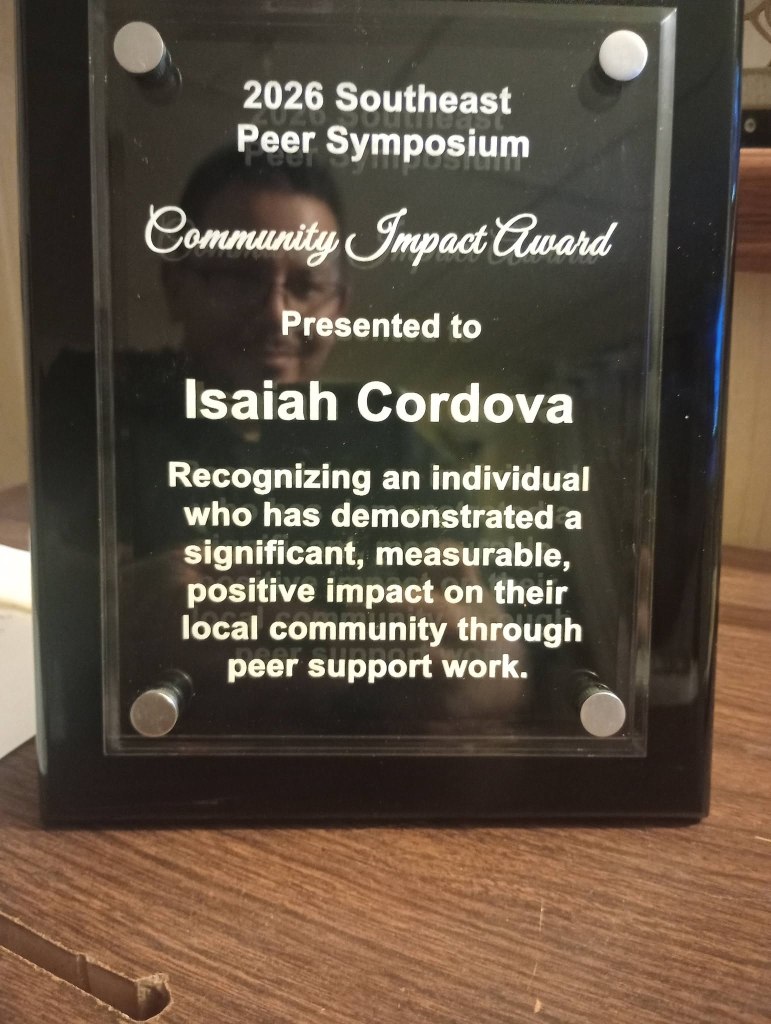
Photo credit: Community Impact Award / Isaiah Cordova
Today, Cordova participates in community-focused initiatives throughout southeastern Colorado.
“I feel it’s my responsibility to give back to the community that I took from,” Cordova said. “I fell in love with helping people. It’s who I am now.”
Dr. Jarrod Ellingson, an associate professor in Psychiatry-Substance Dependence at the University of Colorado Anschutz Medical Campus, states that recovery often presents challenges that many people do not see after treatment ends. His research concentrates on understanding the causes and effects of substance-use and substance use disorders.
“I think people starting recovery often have friends and family who don’t realize how isolating recovery can be at first,” Ellingson said.
He said long-term success often depends on developing healthier coping mechanisms and maintaining support systems.
“A big one is breaking out of a pattern of using to cope,” Ellingson said. “Learning to sit in discomfort and find alternative ways to cope is important, especially early on.”
The Centers for Disease Control and Prevention states substance use disorders continue to affect communities nationwide, contributing to thousands of overdose deaths annually. Ellingson said access to treatment resources, support groups and recovery services can be especially important in rural communities where resources may be limited.”
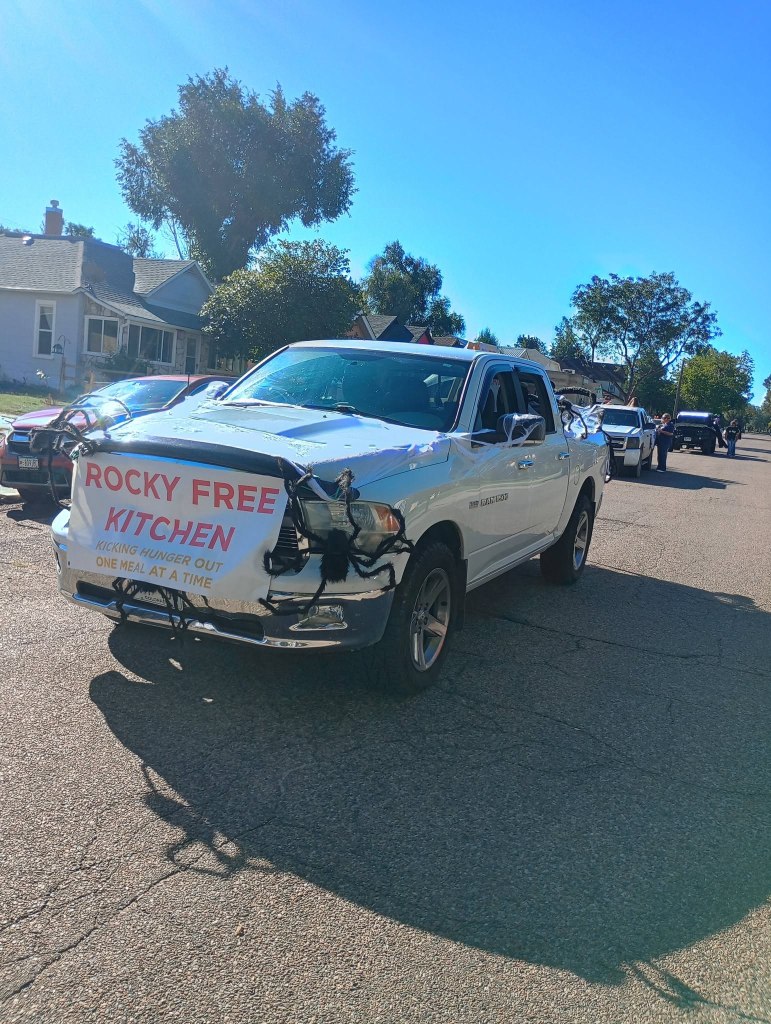
Photo credit: Rocky Free Kitchen Parade Float / Isaiah Cordova
For Cordova, his dependence emerged after a foot injury shortly after high school led to surgery and prescribed pain medication. Combined with alcohol use, he said those circumstances contributed to more that a decade of addiction.
“I went on a long journey, probably a little over a decade of using and self-medicating,” Cordova said.
As his addiction progressed, he said he withdrew from family and friends.
“It affected my life every single day,” Cordova said. ” I was ashamed of myself. I didn’t want to be around the friends that were doing good.”
Cordova said recovery began after he was removed from his environment where his substance abuse developed. He credits his daughter, faith and support system with motivating him to make lasting changes.
“My daughter for sure,” Cordova said.
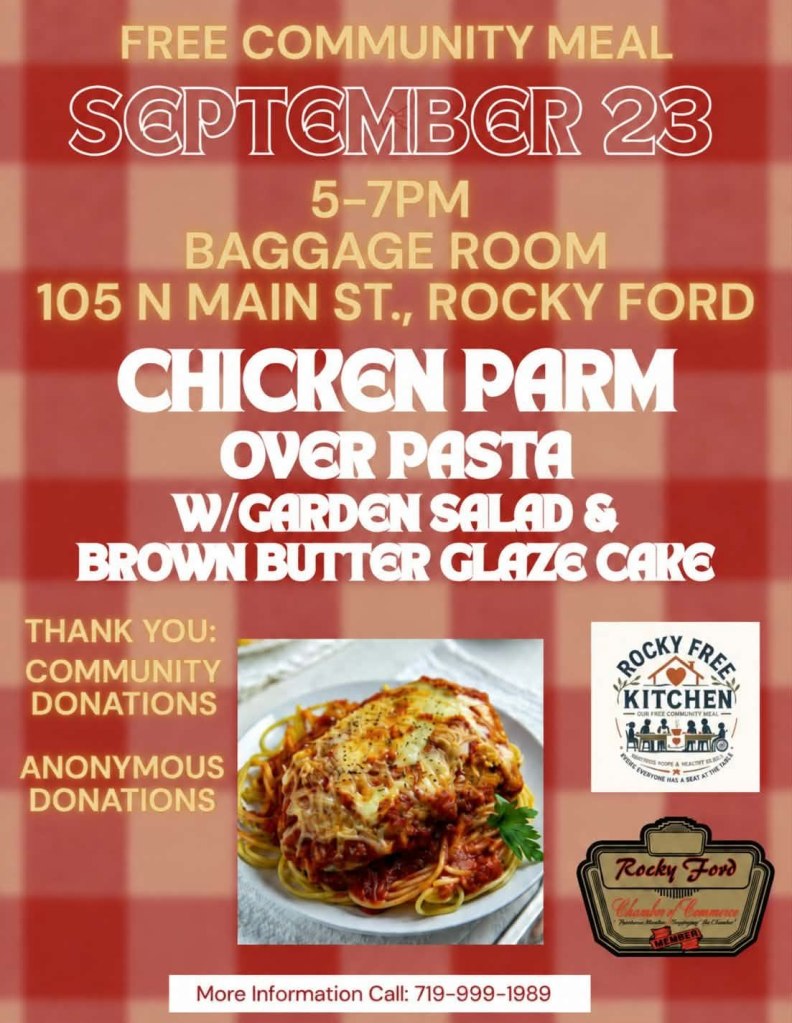
Photo credit: Rocky Free Kitchen Free Community Meal Flyer / Isaiah Cordova
Community outreach programs such as free meal events and peer-support ambitiousness can create opportunities for connection, which researchers identify as an important component of long-term recovery. Those efforts also help reduce stigma by encouraging individuals to remain engaged with their communities while rebuilding their lives.
While Cordova now helps others through community outreach, he said recovery remains an ongoing responsibility.
“I’m still doing it each and every day,” he said. “It’s a fight every day.”
Both Cordova and Ellingson said public understanding can play an important role in helping individuals seek and maintain recovery. Ellingson said one of the most damaging misconceptions is the belief that addiction is a personal flaw rather than a complex condition influenced by environmental and genetic factors.
For Cordova, the outcome of recovery is clear.
“Recovery means everything to me,” he said. “If I hadn’t changed, I probably would not have made it out.”

