Southeast Colorado is entering a winter influenced by what federal forecasters now classify as a record-strength El Nino. The update follows The Blueprint’s earlier reporting with climatologist Allie Mazurek, who explained how warming in the equatorial Pacific alters atmospheric circulation and influences precipitation across southern Colorado.
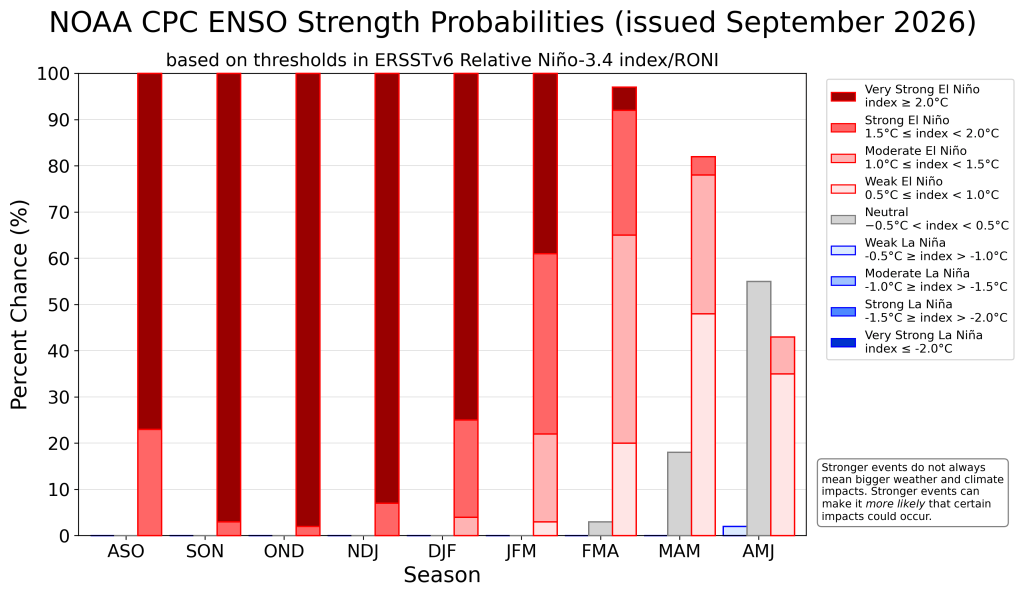
Photo Credit: NOAA
New information from the National Weather Service indicates the event has intensified faster than typical El Nino years. Warning Coordination Meteorologist Klint Skelly of the National Weather Service Pueblo office said the climate pattern is already in the strong category. “We are already in a very strong El Nino setup,” Skelly said. “The forecast is for it to be the strongest El Nino on record.” Only a small number of such events have been documented since the 1960’s.
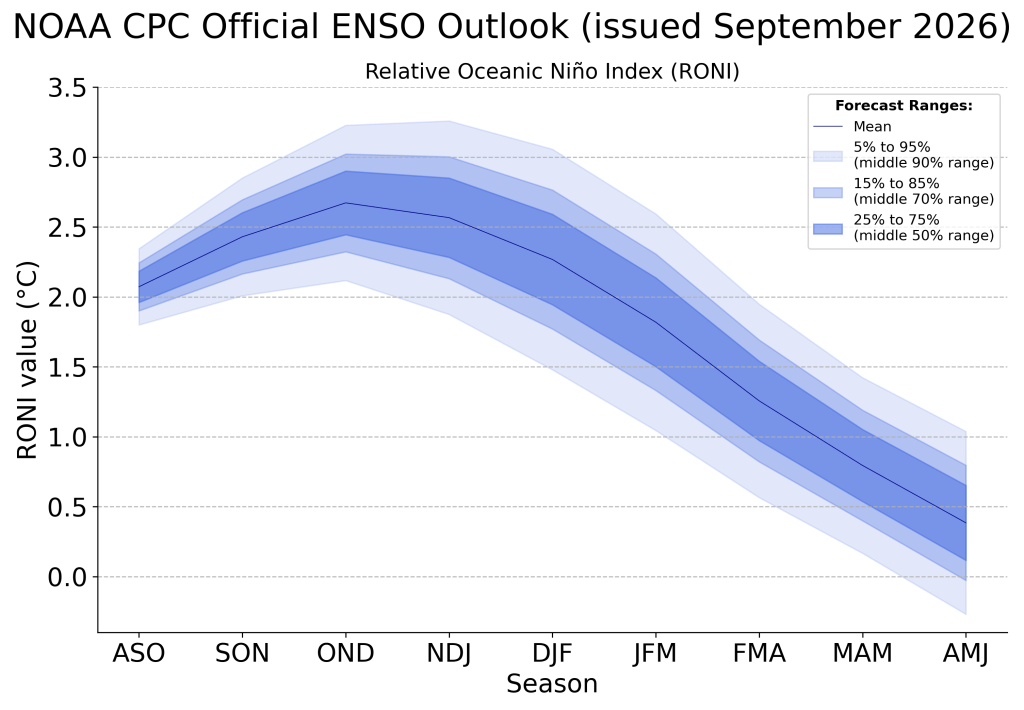
Photo Credit: NOAA
The updated outlook aligns with Mazurek’s explanation that El Nino shifts storm tracks south, increasing the likelihood of moisture across the southeastern plains. Skelly said historical data from past strong events shows Otero County typically receives above-average precipitation from December through March.
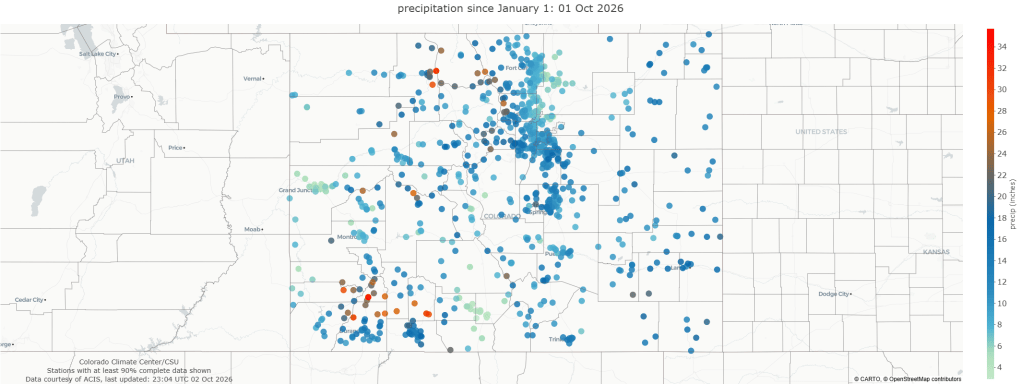
Photo Credit: NOAA
Mountain areas show a different pattern. Skelly said interior ranges often record below-average snowfall during strong El Nino phases because storm systems pass farther south. Last year’s early snowmelt reduced runoff across southern Colorado, and another weak mountain snow season could affect water supplies for communities that rely on the Arkansas River Basin.
Ocean monitoring tools, including NOAA Coral Reef Watch and IOOS ERDDAP, continue to show widespread heat stress across the pacific basin, consistent with strong El Nino development.
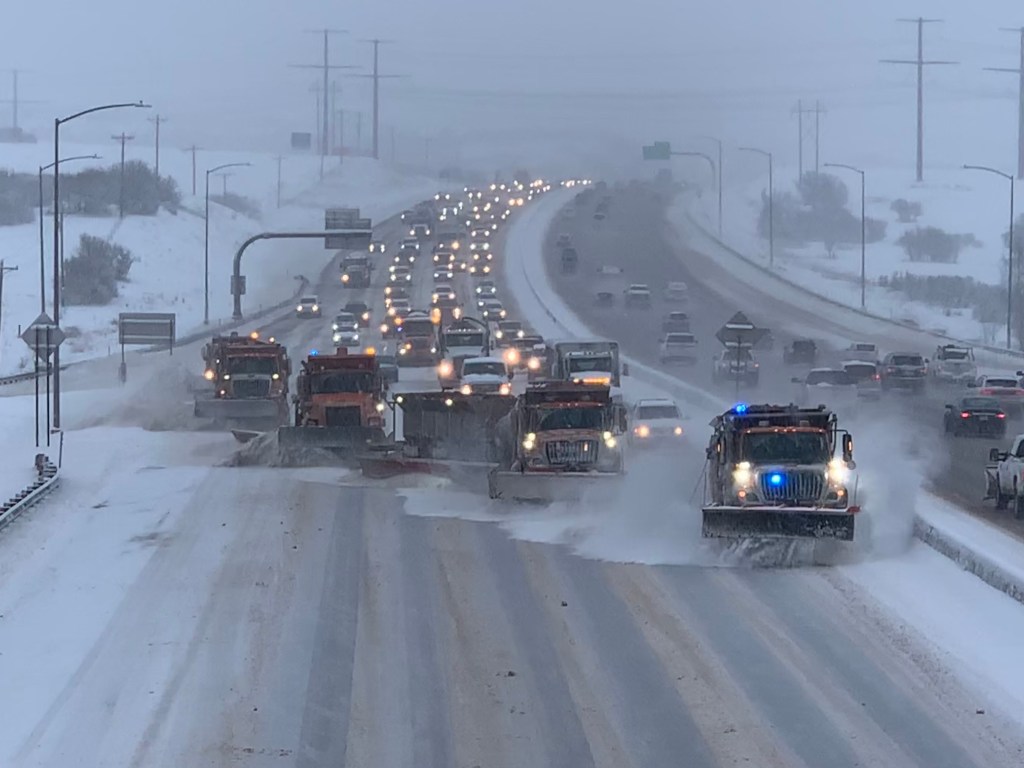
Photo Credit: Colorado Department of Transportation
Local agencies are preparing for potential impacts. A Colorado Department of Transportation employee said crews adjust operations when storms approach. “Even though we are on a federal budget, we stay prepared no mater the size of the storm,” he said. “If it’s supposed to snow, we switch to 12-hour shifts for the duration of the storm.”
NOAA’s Climate Prediction Center continues to report high probability of very strong El Nino conditions through winter, with a gradual weakening expected early spring.
Residents are encouraged to monitor updates from the National Weather Service and local emergency agencies as conditions shift through the season. Skelly emphasized that just being weather aware is important,” noting that staying informed is one of the most effective steps communities can take.

