By Ronald Hernadez Jr.
July 11, 2026

The graph above shows a rise in the average price of a house in the United States beginning from 1963 to 2026. As the article progresses, elements of its possible benefactors will be added, including the highs and lows of that element.
Mortgage
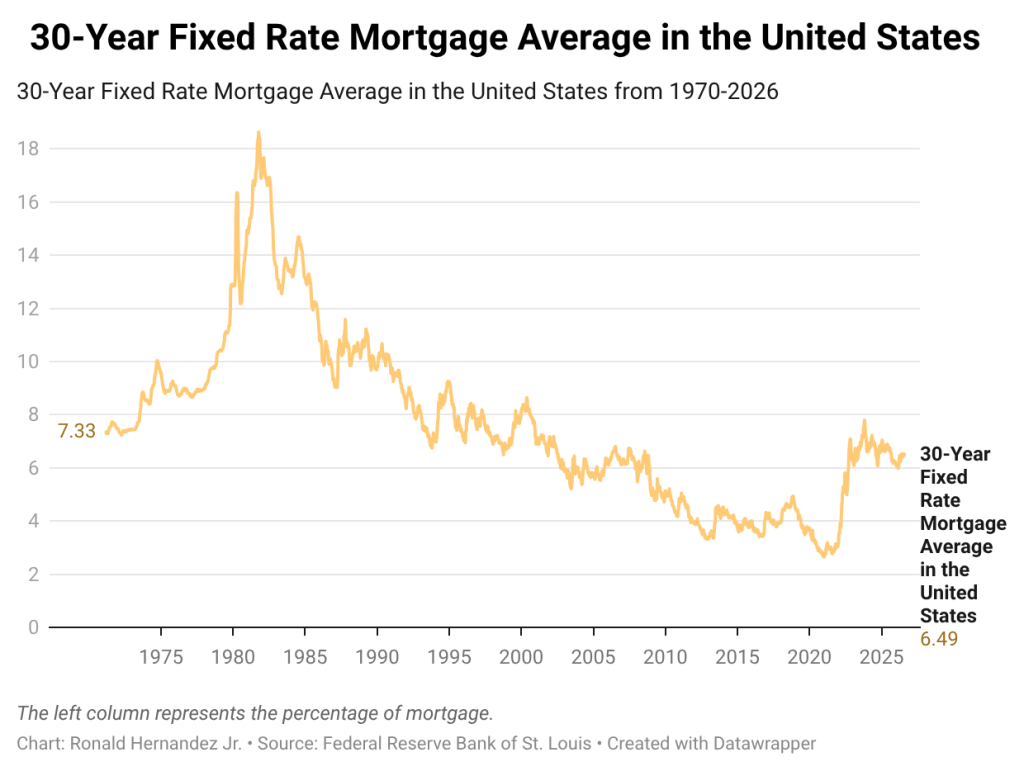
One of the most impactful variables involved in a rising housing market is the fixed mortgage rate, which the 30-year fixed rate is the most common loan utilized by United States citizens. Mortgage rates determine how much a person can afford to borrow, the Federal Reserve System states, “the financial turbulence we have seen had its immediate origins in the problems in the subprime mortgage market.” They go on to mention that various markets have been effected, and the performance of the overall economy faces consequences.
Number of Houses Under Construction in the US
If interest rates are high, it may cause a reduction in private housing construction, and according to FRED, it could “disqualify potential homebuyers by pushing debt‑to‑income ratios over strict mortgage-lending thresholds.” This can also affect the increase in borrowing expenses, tighten loan terms and reduce project feasibility from early planning stages.
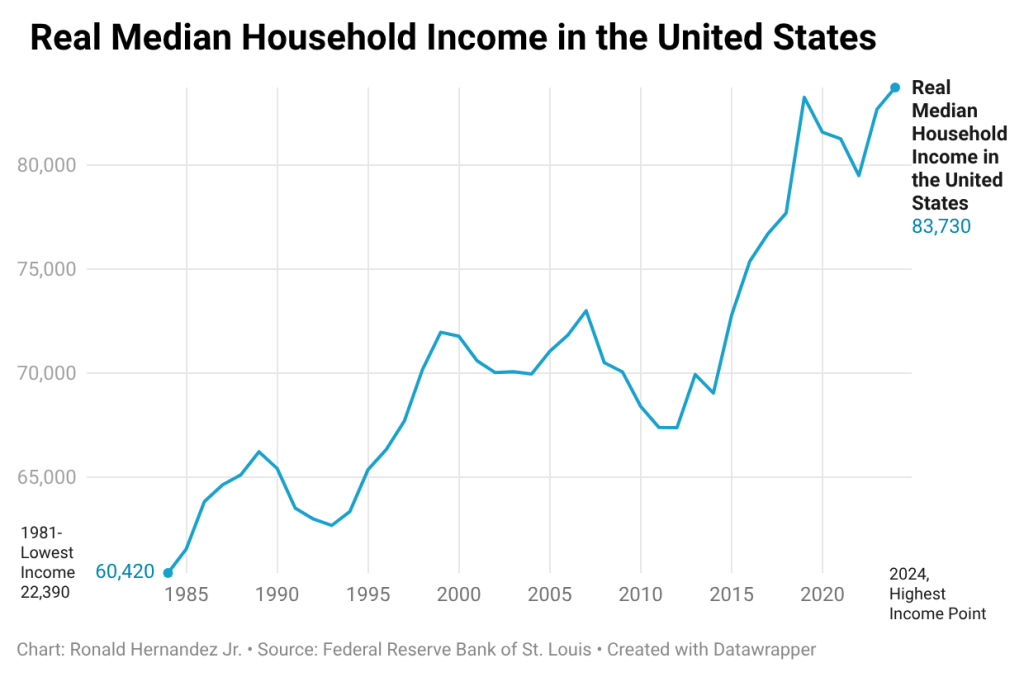
Household Income

Household income directly affects housing prices because it determines how much buyers can afford, which directly shapes demand. The Federal Reserve Bank of San Fransisco states that “standard economic theory tells us that monetary policy should affect house prices and housing finance more generally.”
Final Note
The research done in this article represents a small portion of the many benefactors of housing prices in the United States. For more credible sources, please visit the Federal Reserve Board, Census Bureau, and the United States Department of Housing and Urban Development.

