A Navajo Woman’s Account of Neglect and Survival
La Junta, Colorado – Gabrielle Wilson, a 33 year-old Navajo woman born in Shiprock, New Mexico, has spent much of her adult life reflecting on the conditions she endured after entering the foster care and adoption system as a child. Her account provides a detailed look at how neglect and unequal treatment can shape a child’s development long after leaving a placement.
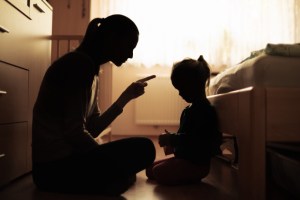
Image Credit: kieferpix/Adobe Stock
Wilson was adopted after her biological parents, who struggled with alcoholism, relinquished custody. She was placed with a woman named Billy Jo Smith. What followed, she said, was a childhood marked by persistent disparities between her and Smith’s biological children.
One of her earliest memories involved being separated at restaurants. Wilson recalled walking in with Smith’s family and then being seated at a different table with other adopted children. “After a while you realize your adopted parents and her children are eating full course meals and the appetizers that you shared with the rest of the children are going to be your only meal,” she reflects.
Similar occurrences appeared during school-clothing purchases. “When it was time to get school clothes, she would take her kids to the mall and take us to the thrift store,” Wilson said, noting that the experience mirrored the separation she felt at restaurants.
Child welfare guidance emphasizes that foster care subsidies are intended solely to meet the needs of foster children. Omni Family Services states that, “foster care subsidy does not provide income for a foster family, the money is intended to pay for a foster child’s needs, and only those needs.” Wilson said this standard was routinely disregarded in her household.
She also described more sever incidents of neglect. “There was a time when one of the adopted children was so thirsty that he was drinking out of the toilet,” she said. In another instance, she recalled a girl who discarded her food and was forced to retrieve it from the trash and eat it. Wilson said these occurred during her time in Smith’s care.
According to Wilson, Smith later claimed the children had attacked her and sent them to a shelter for troubled youth. The decision resulted in another abrupt relocation, adding to the instability she had already experienced.
When asked about the long-term effects of her upbringing, Wilson said that environment influenced her behavior in lasting ways. “It’s sad to say, but it made me stingy with my things,” she said, describing a habit formed from years of scarcity and uncertainty..
Wilson said she hopes to see stronger oversight within the foster care system. Her recommendation is clear: more security and background checks on all foster parents and social workers in order to make safer environments for foster children.”
She now resides in Colorado with her child, partner, and extended family, building the stability she once lacked.

Image Credit: Vanessa Photography
Psychological Impact of Maltreatment
Vanessa Avila, a psychology student and children’s advocate, said the behaviors Wilson described align with patterns commonly seen in children who experience neglect. Avila noted that her step-children developed similar traits after living in environments where food was inconsistent and adult supervision was unstable. She said that “after being fed improperly and seeing men go in and out of the house led to stinginess,”echoing Wilson’s experience.
Avila emphasized the importance of mental health screening and oversight within the foster care system. “Mental health is a big thing and even though foster parents are hard to come by, they need to go through screenings,” she said. She added that, ” these foster kids are coming out with stories that they have been abused in every which way, and I think our system has failed a lot of those kids.”
Both Avila and Wilson said they believe maltreatment may be more widespread than current data reflects, citing recent case nationwide in which abusive foster parents were later exposed. They said increased accountability and public awareness are necessary to protect vulnerable children.
Individuals who suspect child maltreatment are encouraged to contact their state’s Child Abuse and Neglect hotline, website, or local reporting system.

